
Sourcing an Android TV Box Manufacturer in India: MOQ, Private Mold and Certifications
This guide is for buyers who already run a TV service and are comparing suppliers: ISPs, cable and broadband companies, IPTV and OTT operators, and the integrators who serve them. It covers the three terms that cause most confusion in a quotation, which are MOQ, private mold and certifications, and the questions that turn each one into something you can compare.
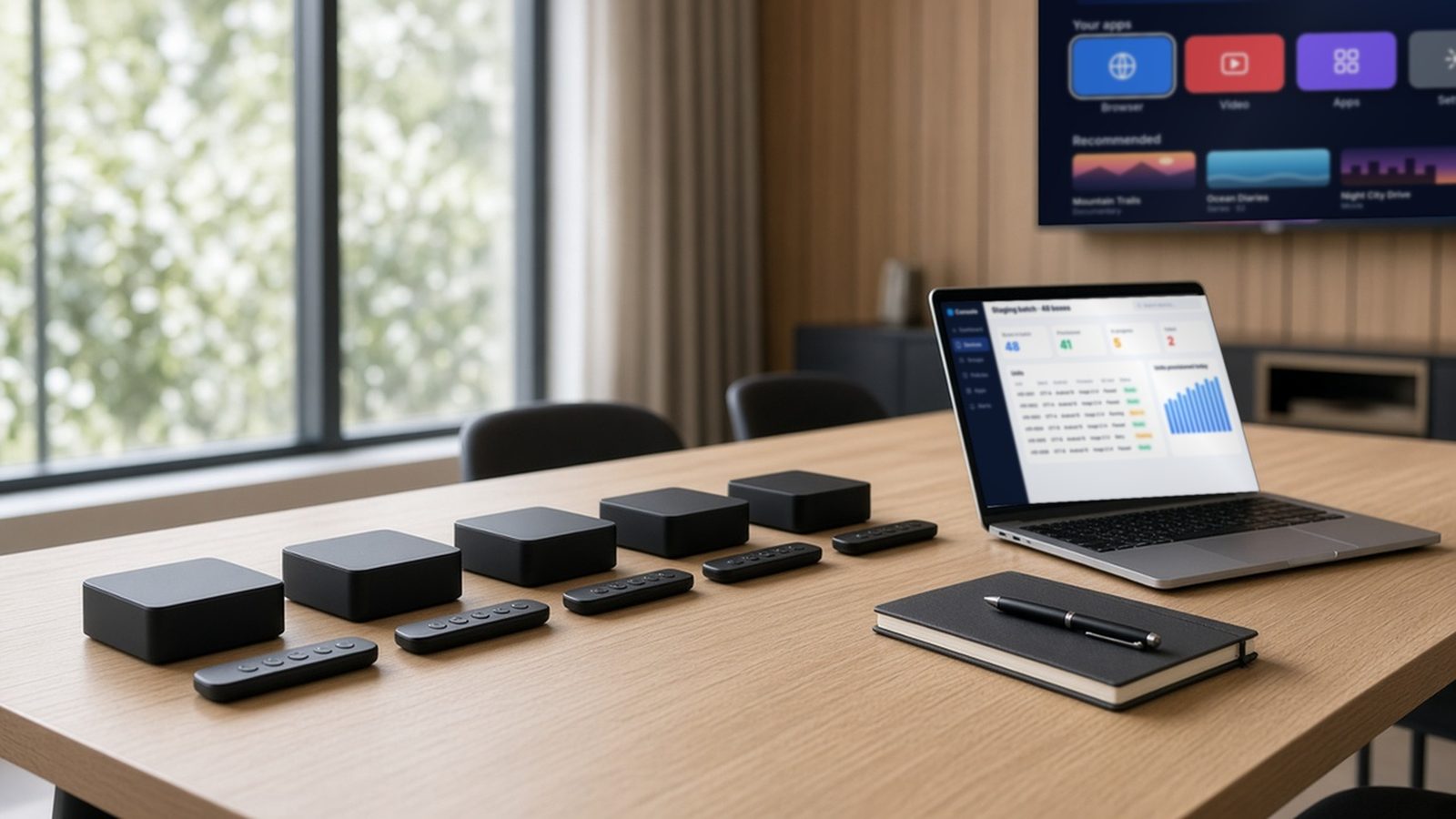
Manufacturer, assembler or trader: ask first
Three kinds of supplier all call themselves a manufacturer. A manufacturer designs or specifies the board, controls the housing and firmware, and can change them for you. An assembler builds boxes from someone else’s design. A trader resells finished boxes. Each can be a fine partner, but only the first can adapt a box to your needs without starting over.
- Who owns the hardware design and the firmware build, and who can change either?
- Who makes the housing, and is it a shared shell or a dedicated mold?
- Where is the box built and tested before it ships?
- If you need a change to boot behaviour, ports or software, who does the work and how long does it take?
Maram Technologies manufactures and supplies commercial Android TV boxes under the HORON brand from Hyderabad, with wholesale and project supply, private-mold options and export enquiries. The Android boxes and sticks page lists the range.
MOQ: ask what it covers, not only what it is
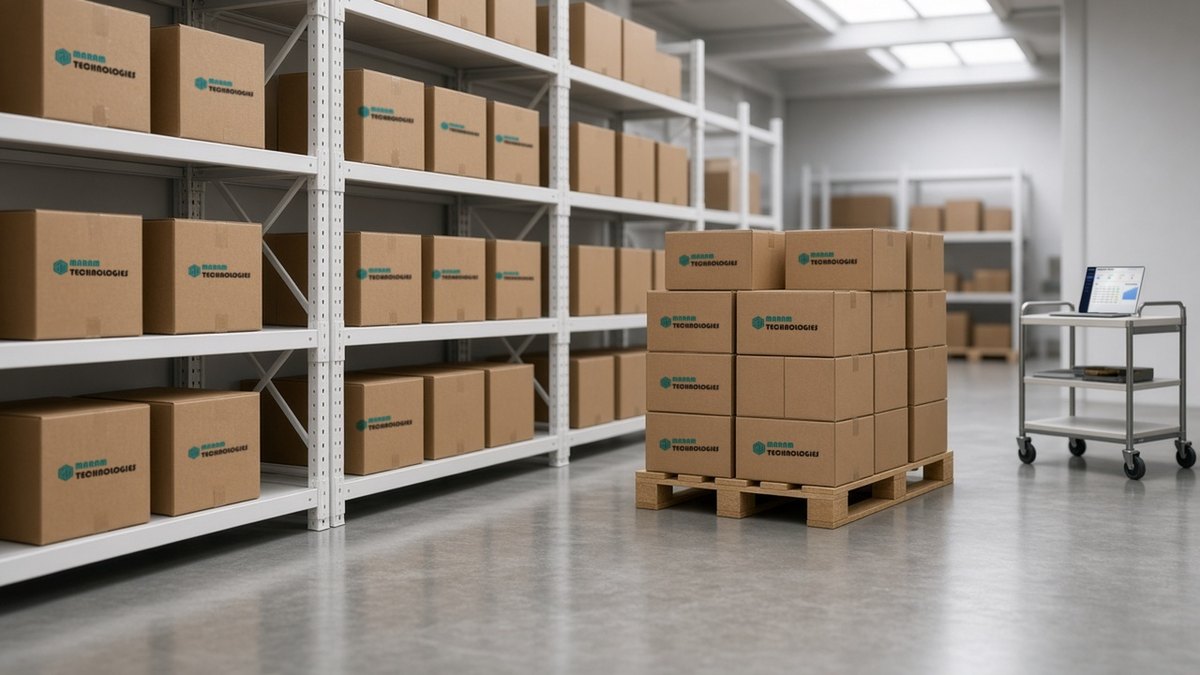
MOQ, or minimum order quantity, is the smallest order a supplier will accept. It is rarely one fixed number. It tends to change with what you are asking for, so a single figure quoted in a phone call can mislead you. Ask for it in writing, version by version:
- Is the MOQ per model, per storage option, per colour or per branding variant?
- Is it different for a standard stock box, a box with your logo and a box in a new housing?
- Is there a separate, smaller quantity for samples and a pilot batch?
- Can the first order ship in several deliveries, or must it all be taken at once?
- Does the unit price change at higher quantities, and where do the steps fall?
- Is reordering the same model easier than the first order?
For most operators the sensible plan is a pilot first, then a first volume order sized to one region, then reorders. Tell the supplier that plan up front so the quotation matches it. When you enquire with Maram, share your quantities, timeline and MOQ expectations so they can be answered in the quotation.
Private mold: what it is and what it changes
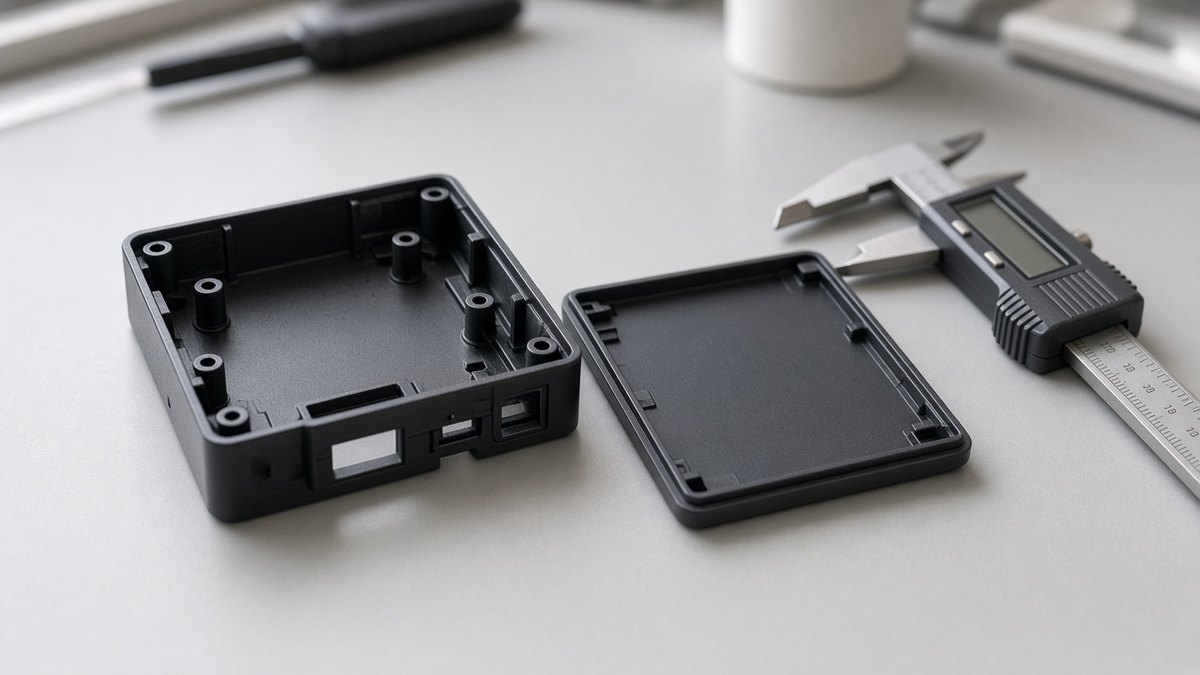
A private mold is a tool made to produce the casing for one product line. Many low-cost boxes share a generic shell that dozens of brands also use. With a private mold, the casing is its own design, so the box looks like part of your service and not a supplier’s catalogue item.
The HORON H15 Plus uses a private-mold housing, HORON’s own custom-made design. Maram also offers operator branding on HORON boxes: your ISP or operator logo goes on the box instead of the HORON name. If you want a casing of your own beyond that, raise it early, because a new mold adds a design and tooling stage before the first box is made.
Whichever supplier you speak to, ask these questions:
- Who owns the mold, and what happens to it if you change supplier?
- How long does a new mold take before samples can be approved?
- What does it cost to change the casing later, for example to add a logo?
- Which branding is included: the logo on the housing, the start-up screen, the remote or the carton? Each is a separate item, so confirm each one in writing.
Approvals and certificates to ask any supplier about
A box that is not properly approved can be held up at import, refused by a distributor or become a problem when a regulator or a customer asks to see paperwork. The right list depends on the box, its wireless modules and the market you sell into, so treat the list below as questions for every supplier, not as a claim about any one of them.
- Indian product registration. Ask whether the box category needs BIS registration and, if so, to see the registration against the model you will receive.
- Wireless and telecom approvals. The WiFi and Bluetooth modules usually need approval for Indian use, and some telecom equipment falls under testing and certification schemes. Ask which apply.
- Safety and EMC test reports. Request reports for the box and for the power adapter, from a recognised laboratory, with the model number that matches the box.
- E-waste obligations. Ask who carries the producer responsibility for the box, and how end-of-life returns are handled.
- DRM and content licensing. If your service needs a particular DRM level or Google services, confirm in writing that the box meets it.
- Export markets. Ask which marks your destination requires, such as CE or FCC, and who obtains them.
Three habits make this simpler: ask for documents, not assurances; check that each document names the exact model and revision you are buying; and re-check whenever the supplier changes a board or a wireless module. Regulations are updated from time to time, so confirm the current rules with your compliance adviser. When you enquire with Maram, mention the markets and approvals you need so they are discussed before the quotation, not after the boxes ship.
Samples and the pilot are where you really choose
Specification sheets look alike. Your own test decides. Install your licensed app and middleware client on sample units and run them on your own network, in a home that looks like your subscribers’ homes:
- Channel changes, picture quality, guide loading and app start-up time.
- Remote pairing, range and battery behaviour.
- WiFi performance on the 5 GHz and 2.4 GHz bands, and on Ethernet.
- Recovery after a power cut, with no one touching the box.
- How software updates are delivered and who controls the timing.
The commercial Android TV box buyer guide goes deeper on the hardware checks, and Android TV boxes for ISPs and IPTV operators covers replacing boxes, adding subscribers and switching suppliers.
Warranty, spares and supply you can plan around
The best box is the one you can still buy next year. Ask each supplier for:
- The warranty period and what it covers, in writing.
- The replacement process for a box that fails soon after installation.
- A spare pool plan, so regional offices can swap a box the same day.
- Notice of any change to the board, memory or wireless module between batches.
- The lead time for a reorder of the same model.
The HORON H15 Plus carries a 12-month warranty under the supply terms shared at quotation. For fleets in the field, pair the boxes with a console such as Maram’s DCM Console so each box can be tracked by batch and region.
The HORON H15 Plus at a glance
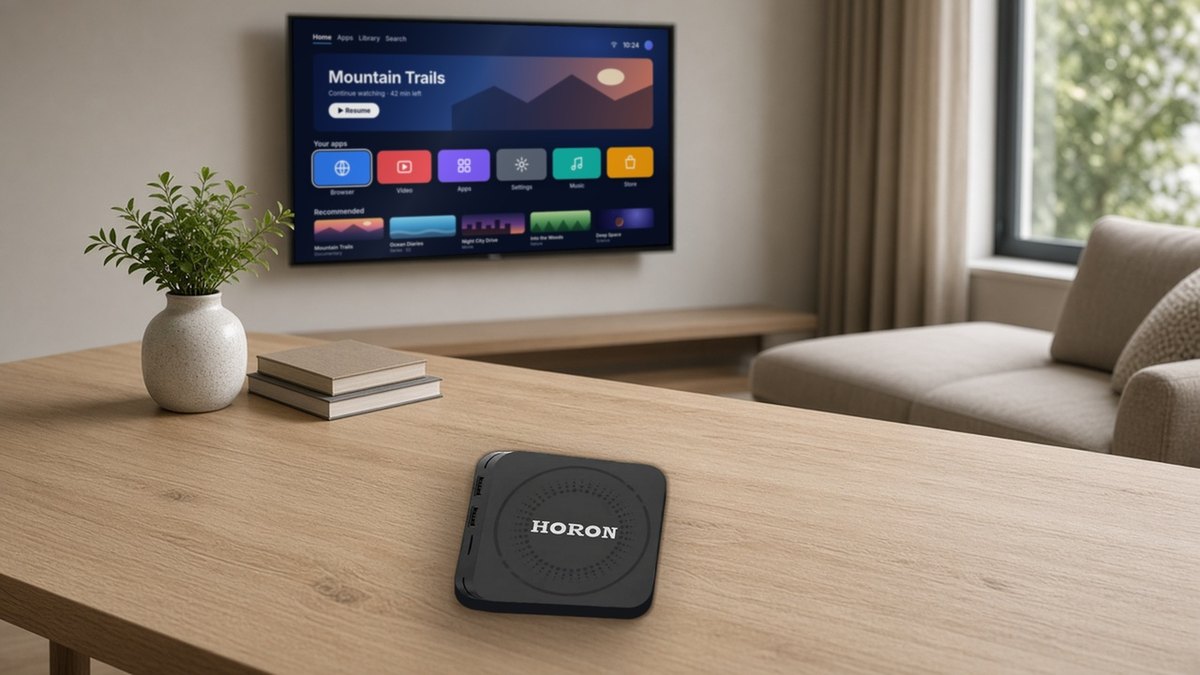
For operators comparing a current replacement or additional box, the HORON H15 Plus offers:
- 4K output and Android 15
- H150 quad-core processor
- 2GB RAM with 8GB or 16GB storage
- Dual-band WiFi
- Bluetooth voice remote
- Private-mold housing
- 12-month warranty
Supplier checklist
- Confirmed who designs, builds and supports the box
- MOQ stated in writing for each version, with a smaller pilot quantity
- Housing type agreed, and mold ownership understood
- Each branding element listed and confirmed separately
- Approvals and test reports requested against the exact model
- Sample units tested with your own app, middleware and network
- Warranty, replacement process and spare plan in writing
- Reorder lead time and change notification agreed
Frequently asked questions
Planning your next box order?
Tell us how many boxes you run today, the quantities you are considering, the branding you want and the approvals your market needs. We will reply with sample and quotation details for the HORON H15 Plus.
Related reading and solutions
- HORON H15 Plus 4K Android 15 TV box
- Android boxes and sticks
- Commercial Android TV box buyer guide
- Android TV boxes for ISPs and IPTV operators
- White-label CMS, MDM and ERP partnerships
- Android MDM (DCM Console)
- Android security updates for device fleets
- Custom hardware and firmware
- Contact Maram Technologies